
You asked a happy customer to tell their story on camera, and two weeks later the thread is still quiet. That silence is the usual result of asking for testimonials, and it usually isn’t a “no”. More often the ask was easy to agree with and hard to act on, so it got set aside.
This post is about writing the ask so that acting on it is easy: what to say, what to answer before they can ask, and when to send it. Finally, it covers how to follow up with the customer who has already gone quiet. What you get out of it is the story your sales team keeps needing and doesn’t have.
It’s tempting to skip the quiet customer and ask someone easier. The trouble is that the story you need usually lives with one person. Late in a deal, once the people who will use your product every day join the calls, the buyer asks specific things: what the rollout did to a team like theirs, and what happened the first time something broke. The answer that settles those questions comes from someone who lived them: a person in the same job, at a company like theirs, who moved her own team onto your product.
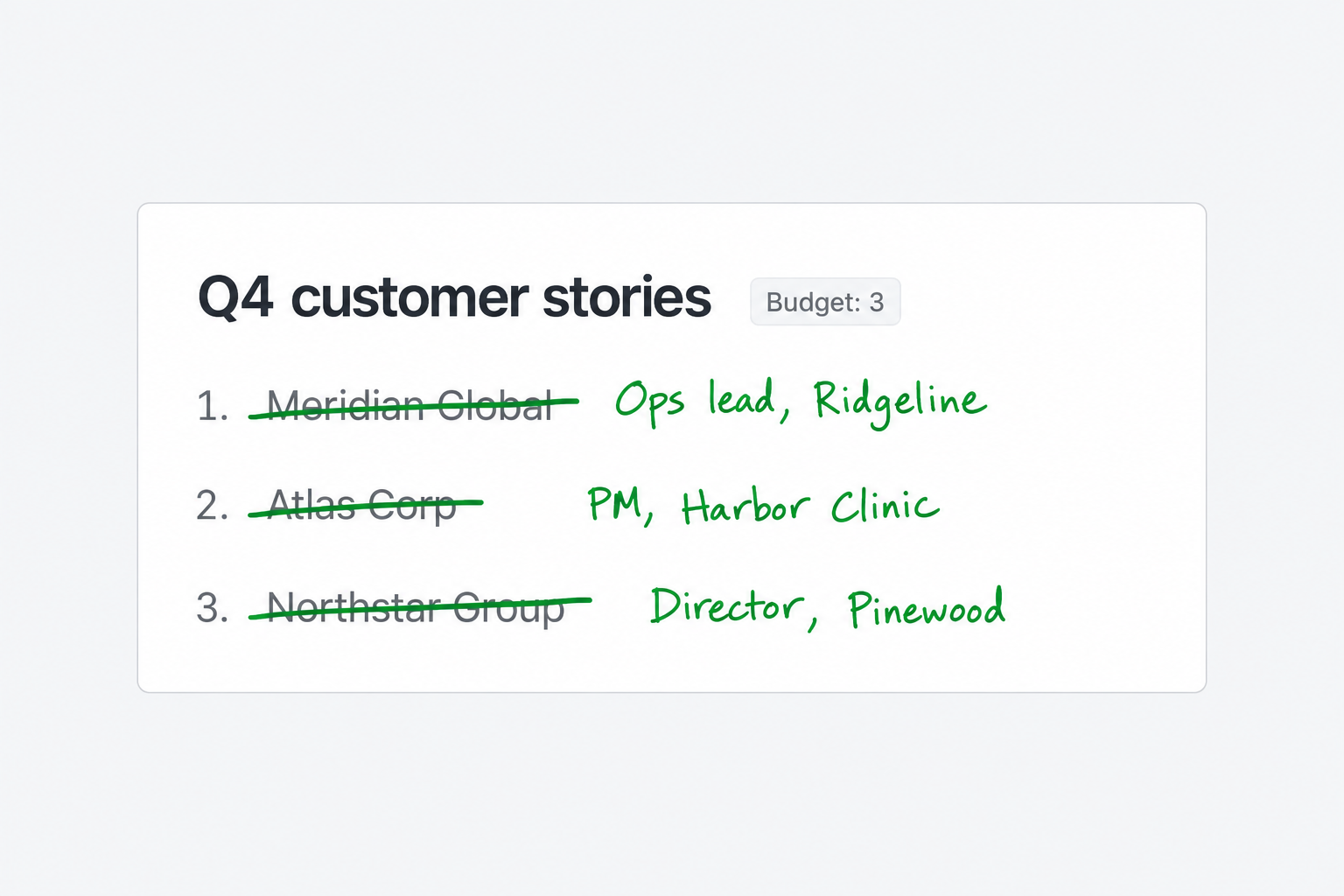
If you haven’t picked that customer yet, start with which customer stories to film first.
Why does asking for testimonials as a favor get silence?
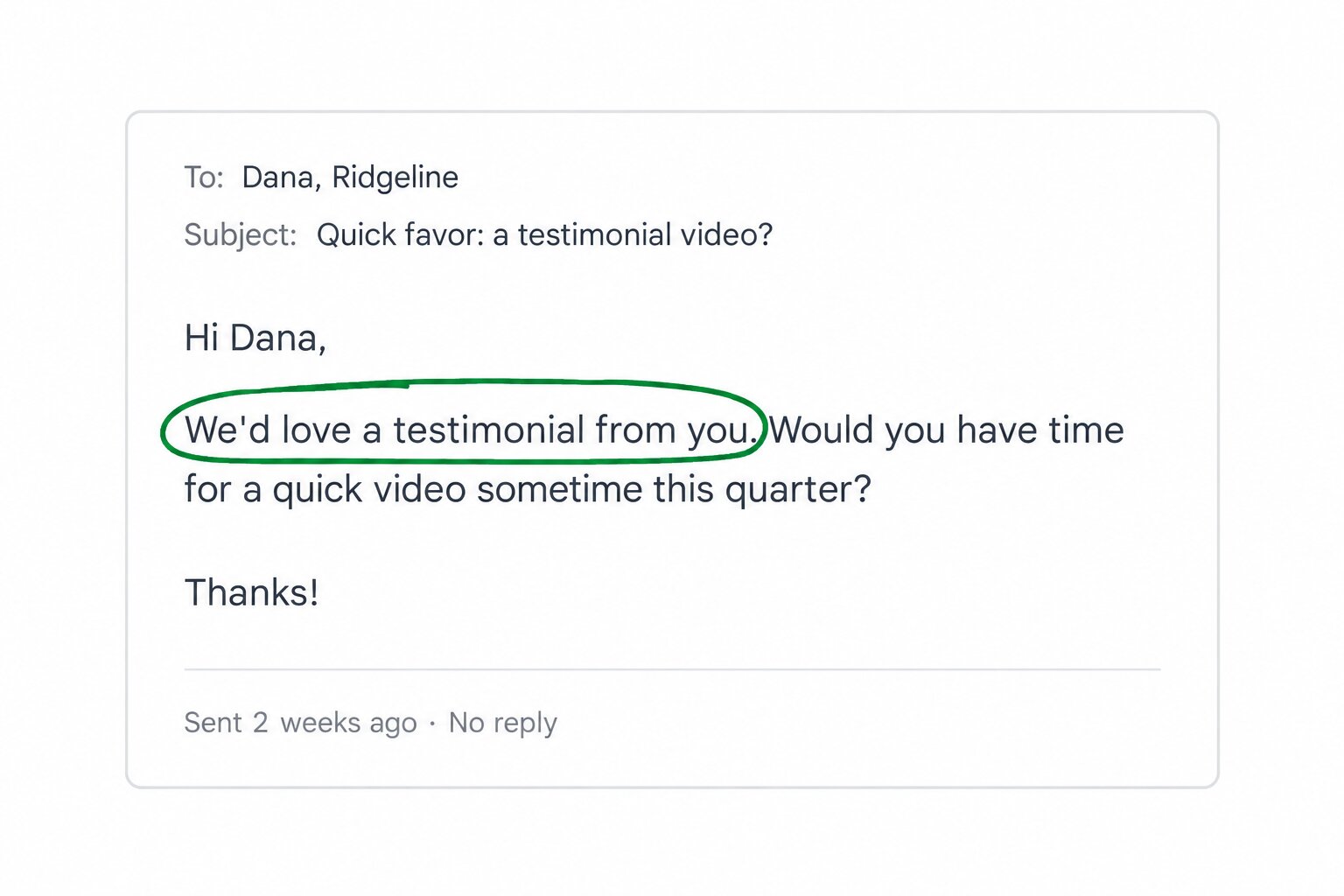
Put two openings side by side.
“We’d love a testimonial from you. Would you have time for a quick video sometime this quarter?”
“Your team cut onboarding from six weeks to three this spring, and it’s one of the best results we’ve seen. We’d like to feature that story in a short video for our sales team to share with buyers in your position: one remote session, about an hour, on your calendar.”
The first opening puts the request on your side of the table. Your customer agrees in principle, files the email under things to do for a vendor, and waits for a quieter week that doesn’t arrive. The second opening is about the customer. It names a result they’re proud of, says exactly what the video involves, and leaves them a one-line “yes”.
Open the last ask you sent and hold it against the two openings above. The asks that go cold usually read like the favor version.
What does your customer have to picture before saying “yes”?
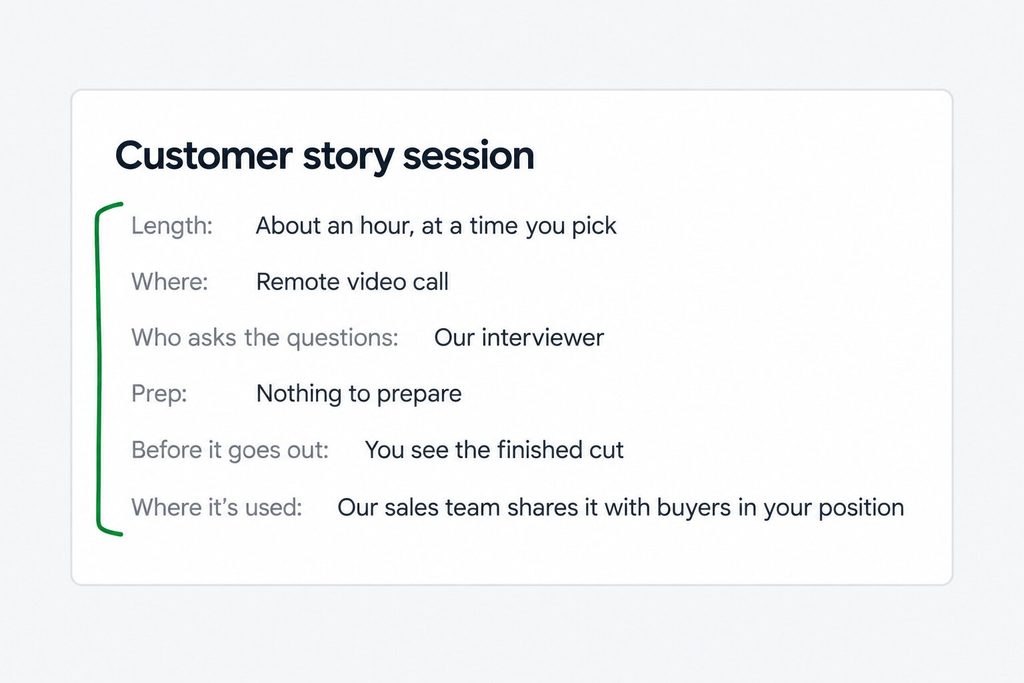
Every question your ask leaves open is work the customer does before replying. Is there travel? Do they need to prepare? How many hours, over how many weeks? Who will they be talking to? Where will the video be used? A good ask answers all of that up front: one remote session of about an hour, scheduled around them, an interviewer who asks the questions, where the finished video will appear, and nothing to prepare.
Be specific about the video, too. “A two to three minute video about how your team cut onboarding time” is easier to picture than “a testimonial,” and easier to agree to. Ask for the real experience, including what was uncertain at the start and how it got resolved, because that’s the part the next buyer believes.
Whatever the ask leaves out comes back as an objection, and the same few come up every time:
- “I don’t have time.” One remote block of about an hour, planned entirely around their calendar, and one look at the finished cut before anything goes out.
- “I’m not comfortable on camera.” The interviewer leads the conversation and asks the follow-ups, so it feels like a chat about their project, not a performance. Name who will be on the call.
- “What’s in it for us?” Their name and their team’s result in front of peers in their field, credited to the person who led it.
- “I’d need to run it past my manager.” Often the ask has to go up a level before anyone can say “yes”. Offer a short note they can forward, saying what the video is for and how little time it takes.
Every objection on that list is a doubt your ask left open. Answer the doubt in the ask and the objection rarely comes up at all. The playbook in the free Testimonial Revenue Toolkit has worked replies to the common objections, plus three ask emails you can edit.
When is a customer most likely to say “yes”?
A plain ask at the right moment beats a perfect one at the wrong moment. Here’s how the same email reads at six different moments:
| When it lands | What the customer hears |
|---|---|
| Right after a win they can measure | “You noticed.” |
| After a support problem you fixed well | “They were there when it counted.” |
| When they renew or add seats | “We’re both investing in this.” |
| While a support problem is still open | “They want something while my problem sits.” |
| While you’re negotiating their renewal price | “This is leverage.” |
| In their first 90 days with you | “Talk about what, exactly?” |
Customers also tell you when the door is open. A top score on your customer survey with a comment attached, an unprompted compliment to someone on your team, a mention of you on LinkedIn, an offer to speak with another buyer on your behalf: any one of these means the “yes” is mostly given, and the ask just has to show up.
How do you follow up with the customer who already went quiet?
Silence after a good ask usually means the email got buried, not declined. So follow up, and keep following up, at a pace that reads as interest rather than pressure. A week or so after the first ask, send a short note built the same way: their result first, the time question answered before they can ask it, from whoever on your side knows them best.
“Following up on my note about your onboarding story. Six weeks down to three keeps coming up here, and we’d like to tell it properly. One remote conversation, about an hour, at a time that suits you, and you’ll see the finished cut before it goes anywhere. If that works, I’ll put you in touch with our production team.”
After that, check in every few weeks, and open each note with something real: a new win of theirs you noticed, a place their work came up in yours, a question a buyer asked that only they could answer. Three or four notes over a couple of months is normal. A customer who stays quiet through all of them is telling you “not now”; say you’ll come back next quarter, and then come back.
Some silences aren’t the customer’s decision at all. The customer wants to say “yes” and is waiting on a manager who hasn’t answered. Ask whether you can help make the case, and send the same short note you’d offer for the manager objection: what the video is for and how little time it takes.
What does one “yes” do for a stalled deal?
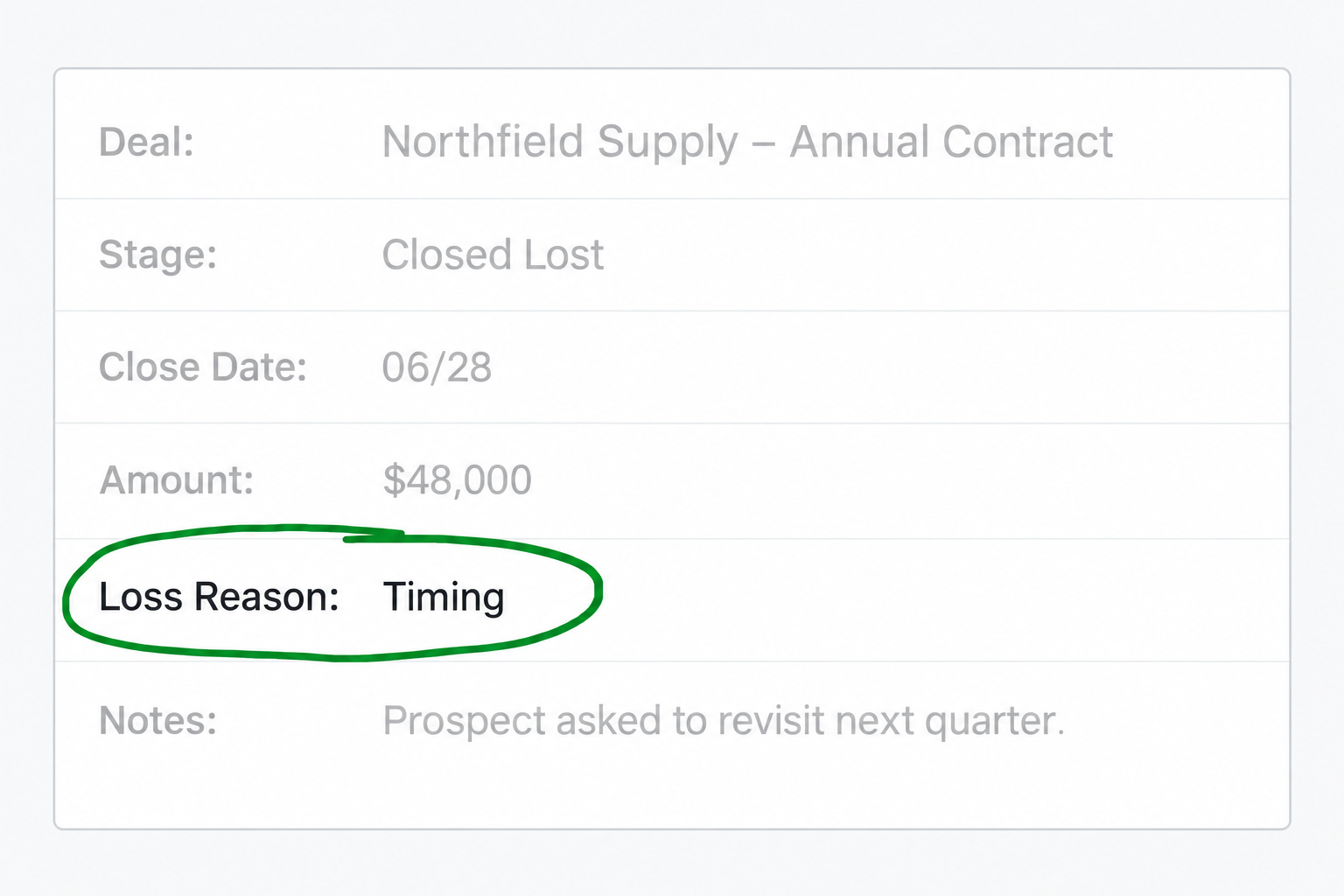
When the ask opens with their win, arrives after a result and says how little time it takes, most of the reasons a happy customer stays quiet are gone. What you get back is the story your sales team needed on the last call that stalled. If you aren’t sure which story that is, the deals you lost to “timing” shows how to find where buyers couldn’t see enough.
The Customer Participation Playbook goes deeper on all of this, from timing and framing to the objections and the three ask emails. It’s free inside the Testimonial Revenue Toolkit.