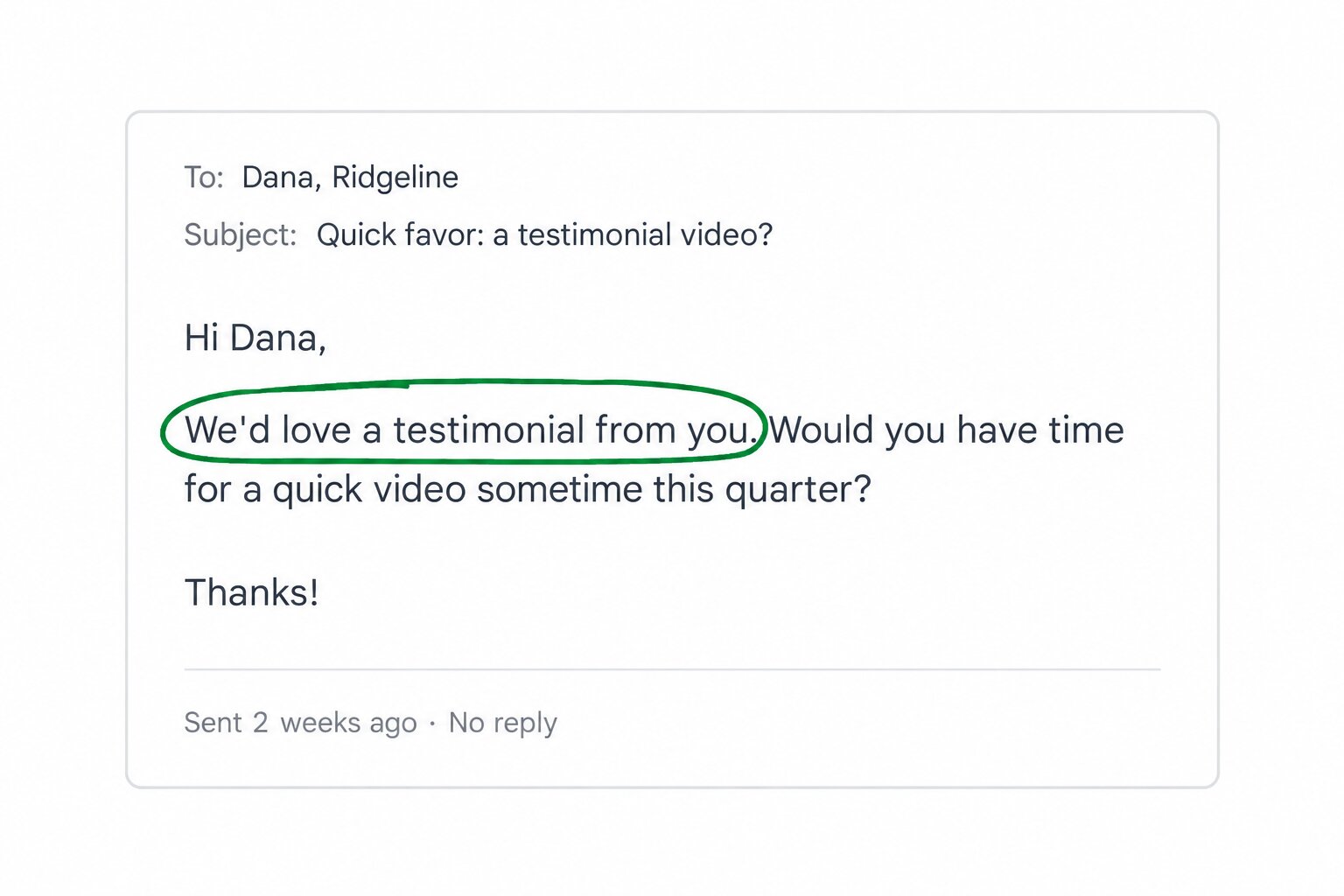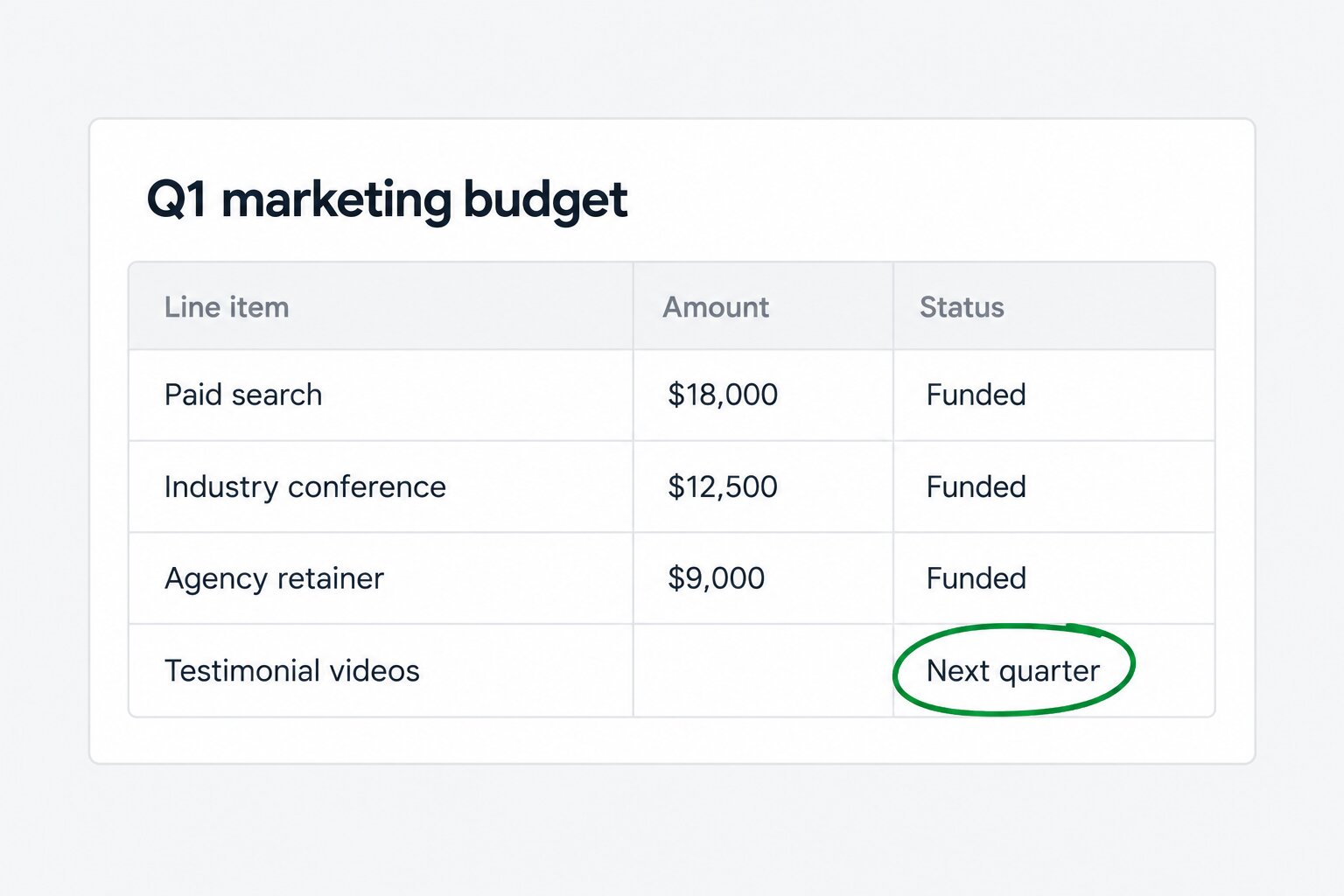

You’ve wanted to make testimonial videos for a while. Every time they come up in planning, they lose to something with a clearer payoff: paid search, the conference, the agency retainer. Nobody says “no”. The line just never gets funded, and next quarter it’s back on the list.
That has nothing to do with whether the videos would work. The request arrives as “we should have testimonial videos,” which sounds like a nice-to-have because it’s missing the two things every funded line has. One is a problem the business feels. The other is a cost to weigh against it.
This post builds the request from your lost deals and your customers. When it’s done, the line on the budget sheet has a reason behind it, a figure, a price, three customers’ names, and a way to know whether it worked.
What problem does the business feel?
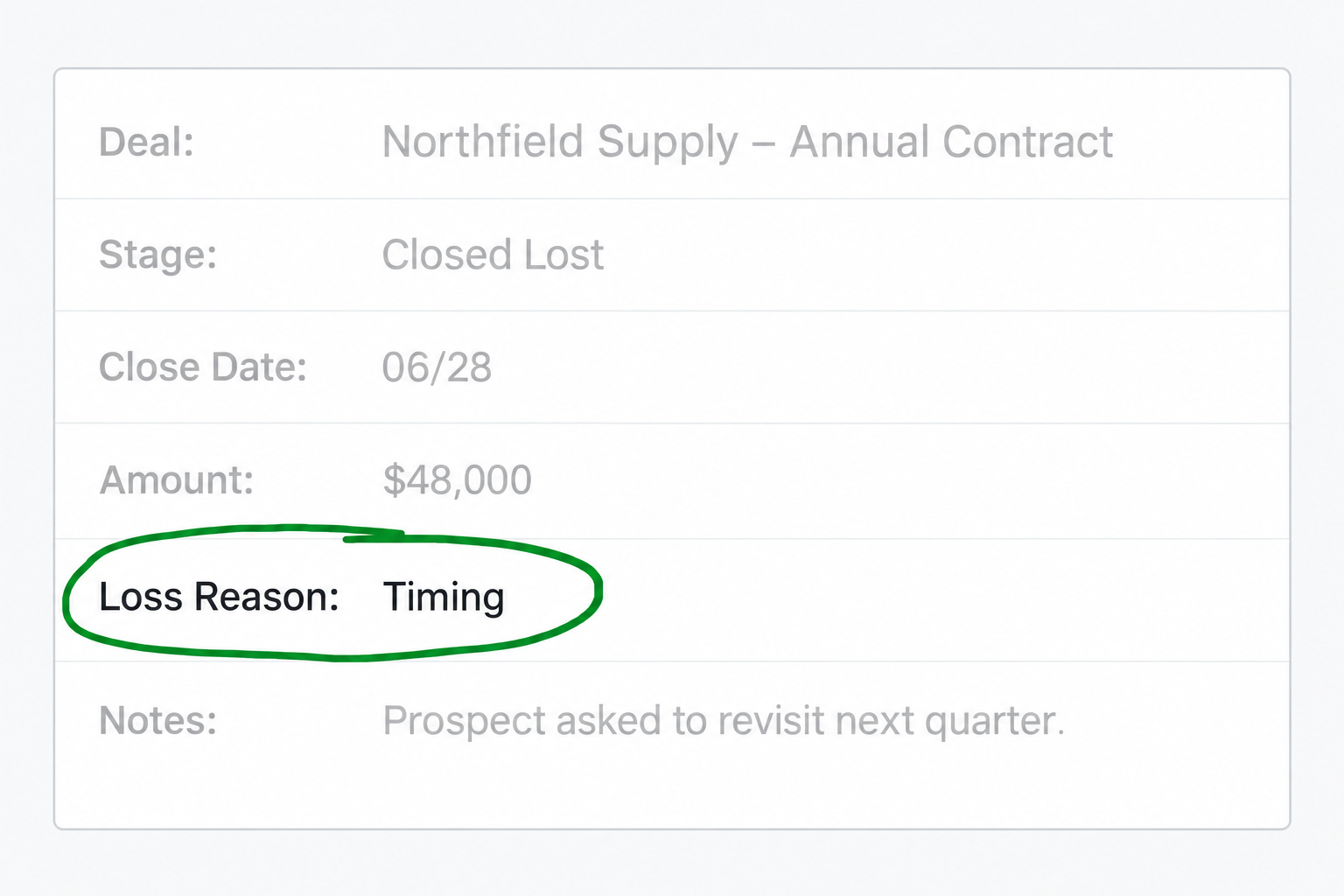
The problem is lost deals, and specifically the ones that got past the demo and then stalled before signing. Your sales team knows them. The buyer sat through the demo, asked good questions, brought a colleague to the next call, and then went quiet. In the CRM they’re marked “timing” or “no decision,” and nobody looks at them again.
Some of those really did lose to timing. Others stalled because the buyer couldn’t picture what working with you would be like, and nothing on your site showed them. A customer on video, answering the question the buyer went quiet on, is what would have shown them.
How to tell which of your lost deals stalled that way walks through reading the notes.
Once you can say something like “eleven deals last year got past the demo and stalled on questions a customer of ours could have answered,” the request has changed shape.
It’s no longer marketing asking for nicer content. It’s a way to close deals the company is losing now.
What are those deals worth?
Once you have the deals, the next question is what they’re worth. You can answer it without borrowing a statistic from an agency’s deck, which describes someone else’s company and can’t be checked.
Take the eleven deals from the example above. Ask how many of them a video would have turned around, and keep the answer modest. Call it two. Two deals at your average deal size, $25,000 in this example, is $50,000 in a year.
Last year’s eleven deals tell you the size of the prize. The videos themselves go to this year’s buyers, at the same point where last year’s went quiet. So the claim is simple. If three videos cost less than one deal, then one deal that closes because of them this year pays for all three, and the second is the upside.
If you’d rather show it as a change in your close rate, there’s a calculator for that in the free Testimonial Revenue Toolkit; enter your figures, not its presets.
What does it cost, and how do you show that?
Any figure gets weighed against a price, so put the price beside it yourself. Get a quote for three videos.
Our rates and sample estimates are on the pricing page if you want a starting point. A real figure beats an estimate. A quote also tells you what’s covered, which usually means the recording, the editing, and how many videos come out of one recording with each customer.
Put the quote beside the revenue figure on the same slide, and point out the difference in shape. The cost is paid once, and the videos stay useful on next year’s stalled deals until the product or the customer changes.
Which testimonial videos do you ask for?
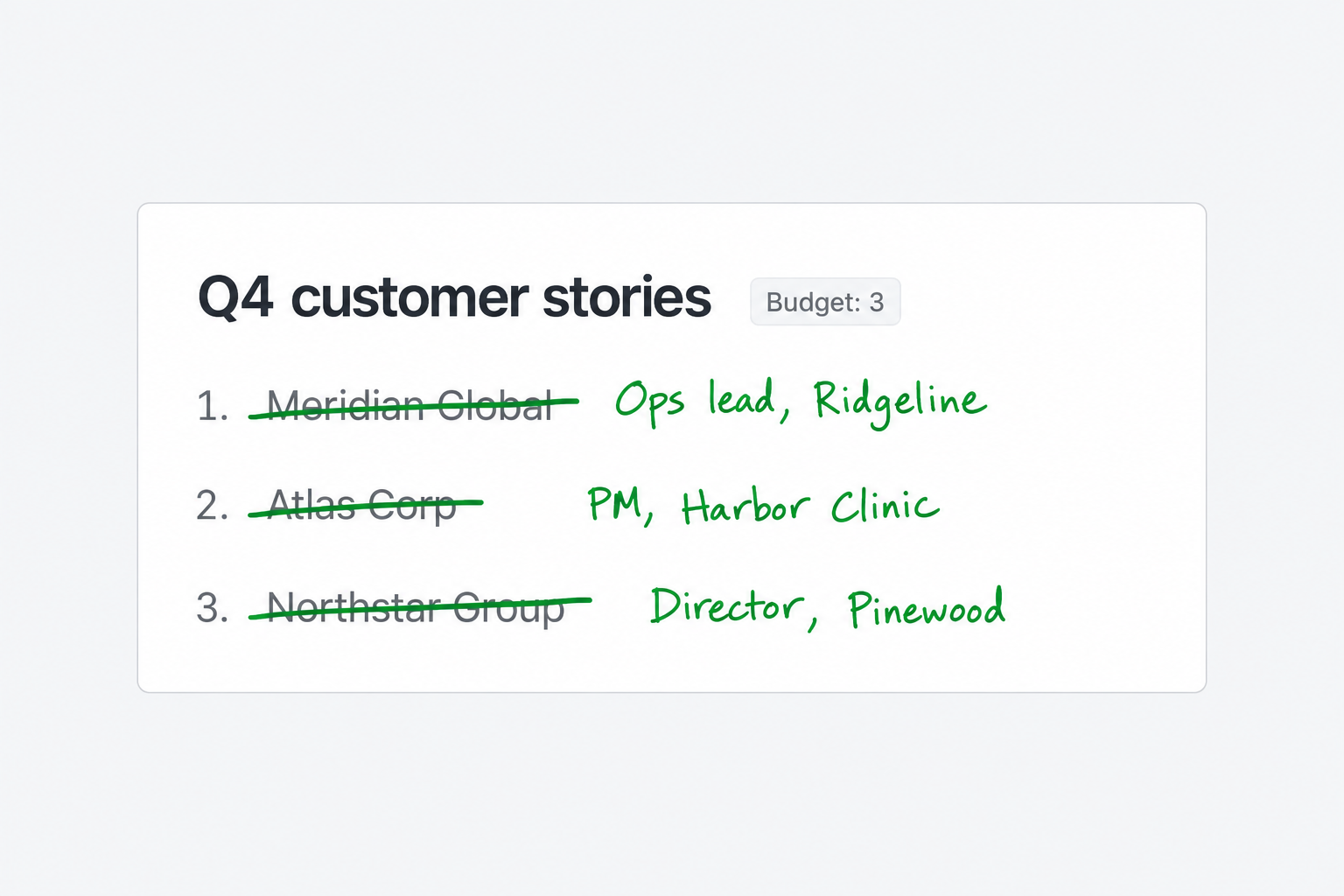
With a figure and a price on the page, the request needs to say which videos it’s for, and the answer is the three that speak to the questions your eleven deals stalled on, rather than the three biggest logos. Those questions tend to be practical ones:
- How hard was the switch, really?
- Can the reports be trusted?
- What happens when something goes wrong?
For each question, name the customer who lived through it and could describe it on camera.
Picking testimonial videos by the question each one answers covers how to choose.
Naming three customers does two things for the request. It shows the videos are aimed at deals in the pipeline now, and it makes the plan concrete enough to fund, because the next step is an email to a customer rather than another planning session. Those customers still have to agree, and asking in a way that gets a happy customer to say “yes” is its own skill. But a request that names them has its next step on the page, and that step is an email you can send once it’s approved.
How will the videos reach those deals, and how will you know?
Naming the customers settles what gets made, not how the finished videos get in front of a buyer who has gone quiet. Testimonial videos tend to end up on a customer stories page, and a buyer who stalled after the demo isn’t going to browse there. So the request has to say how each video reaches those buyers.
The plan is that sales sends the matching video at the point where deals went quiet last year, usually right after the demo, when the buyer’s colleague joins and the hard questions start. Get the sales lead’s agreement to that first, and put it in the request.
A reference call asks your customer for an hour every time a new buyer wants one, and it still only reaches that one buyer. Record her once, and every buyer with the same doubt gets to watch someone in her position describe what happened, in her own words, whenever the deal needs it.
You’ll know whether it worked deal by deal. Keep a list of every stalled buyer who was sent a video, and what each one did next, whether they replied, booked the next call, signed, or stayed quiet. At eleven or so deals a year that list says more than any percentage would, and it gives the videos a result you can check.
What does a testimonial video budget request look like?
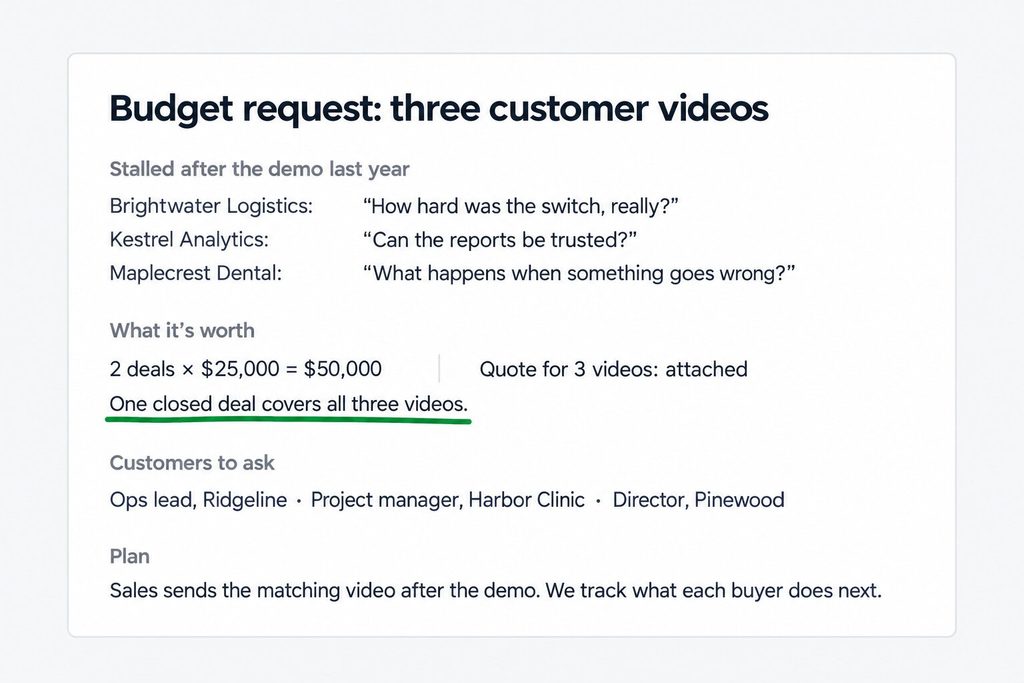
Put together, everything above fits on one page.
It opens with the deals that stalled last year, a few of them named, and the question each buyer went quiet on.
Under that sits the figure, what two of those deals are worth, with the line that one turned deal covers the cost. Next to the figure sits the quote.
Then come the three customers you’d ask, each beside the question their story answers.
The page ends with the plan. It names who on the sales team sends each video, at what point in a deal, and the list you’ll keep of what each stalled buyer did next.
That’s a request with a reason, a figure, a price, three names and a way to know whether it worked, which is more than most lines on that budget have.
Every piece of it has a tool in the free Testimonial Revenue Toolkit: the calculator for the figure, a worksheet for choosing the three stories, and a playbook for getting the “yes”.
What you get for the work is a request nobody can wave off. It answers the doubt that stalled last year’s deals with a customer the buyer will believe, and it puts the price of doing that next to what those deals were worth.